technology
One charger for the whole bag: the GaN brick that retired my cable pouch
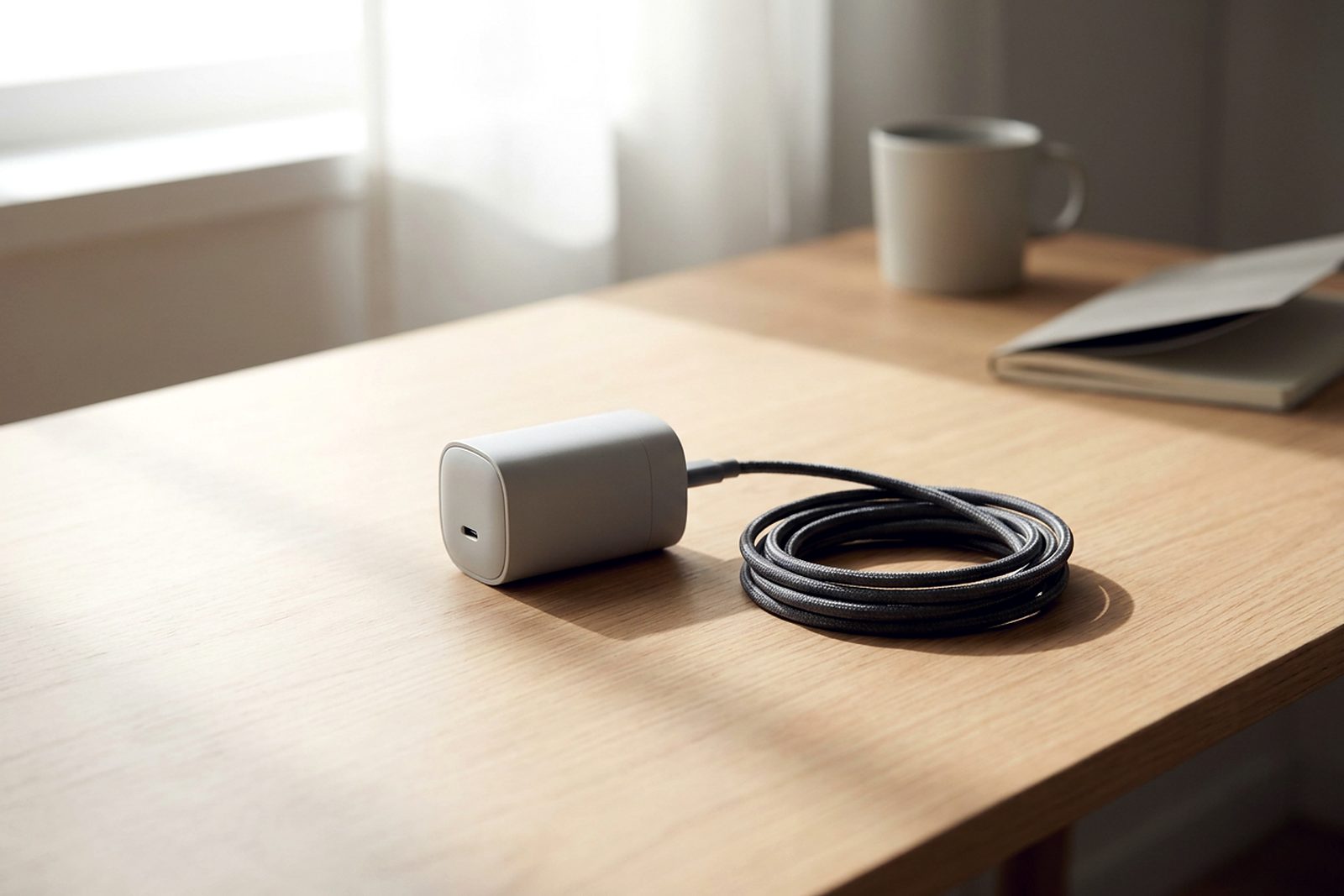
A charger the size of a plum now powers everything I carry. The pouch it replaced deserved a small funeral, and this is the eulogy.
For most of my travelling life I carried a pouch. You know the one — a zipped nylon organism containing a laptop brick the size of a paperback, two phone chargers of uncertain parentage, a tangle of cables that had somehow bred in the dark, and at least one adapter for a device I no longer owned. I packed it on every trip, resented it on every trip, and never once questioned it. Then, quietly and without any launch event I noticed, the charger industry had a revolution, and the pouch became a museum piece.
The quiet revolution nobody advertised properly
The revolution has a chemistry-lesson name: gallium nitride, or GaN if you’d rather not say it out loud in an airport. The short version is that it’s a material that lets chargers switch power far more efficiently than the old silicon designs, which means less heat, which means the whole thing can shrink dramatically without cooking itself. The practical upshot is a multi-port brick small enough to genuinely lose in a jacket pocket that will happily charge a laptop, a phone and a pair of headphones at the same time, from one wall socket.
I say “quietly” because this never got the fanfare it deserved. Phones get keynote events for marginally better cameras; the thing that halved the weight of my carry-on got a paragraph on a box. Yet for anyone who travels with more than one device — which, as I write this, is essentially everyone — it’s the most meaningful upgrade in years.
The wattage arithmetic, in plain words
Here is everything you need to know about the numbers, without any numbers. A charger has a total power budget. The laptop is the greedy one at the table: it takes what it needs first. Whatever remains gets shared out among the smaller devices, and the charger negotiates all of this itself — there is no menu, no settings screen, no ceremony. Plug things in; it sorts itself out.
The only decision you actually make is at purchase, and the rule is simple: buy the brick slightly bigger than you think you need. If you size the charger exactly to the laptop, then the moment you add a phone the laptop gets rationed and everything charges at a leisurely stroll. A little headroom means the laptop feasts and the phone still eats properly. The size and weight penalty for that headroom, in the GaN era, is roughly the difference between two coins and three. Take the three coins.
Cable discipline is the other half
The brick solves nothing if you still travel with a nest of mystery cables, so the second reform is discipline. Standardise on USB-C everywhere you possibly can — laptop, phone, headphones, e-reader, the lot. The regulators have largely done this job for us anyway, and I’m rarely grateful to regulators, so savour it.
Then carry exactly two cables: one long, good one — long enough to reach a bed from a badly placed hotel socket, because hotel sockets are always badly placed, I believe by international treaty — and one short one for desks, cafés and power banks. Buy decent ones. A cheap cable is how you turn a capable charger back into a slow one, and you’ll never know it’s the cable’s fault.
I permit myself one legacy exception. There is always one device that refuses to modernise — an old camera, a shaver, some beloved relic with a socket from another civilisation. It gets one cable, clearly its own, and it lives on notice. When it dies, its cable is not replaced. That’s the deal.
Plugs, adapters, and the one-adapter rule
Living in Dubai and travelling between British, European and everything-else plug standards, I’ve watched people solve the plug problem in precisely the wrong direction: an adapter per device, a carrier bag of them, each one a chunky point of failure wobbling out of a foreign wall. The correct answer falls out of the one-brick approach automatically. You adapt the brick, never the devices. One good travel adapter meets one GaN charger, and every device you own is now local, wherever you are.
Some of the better bricks even ship with swappable plug heads, at which point the adapter retires too. But even without that, the arithmetic is pleasing: one adapter, one brick, two cables. That’s the entire electrical infrastructure of a working trip, and it fits in the pocket of my jeans with room for the boarding pass.
What this is actually about
Let me disarm my own enthusiasm before it does any damage: I have not discovered a gadget, and I’m not selling one. What I’ve actually removed from my life is a category of decision. Which charger goes with which device. Whether the pouch is packed. Whether the hotel has enough sockets — it never does — and which device sleeps hungry tonight because there were three plugs and one adapter.
All of that is gone. Charging is now one object and one habit, which means it occupies no thought at all, which is the entire point. The best travel gear doesn’t add capability; it deletes questions. Most purchases promise to do more. The rare good ones let you think about less — and this one, unusually, delivers. The pouch, for the record, still exists. It lives in a drawer at home, full of cables I’m keeping for reasons I could not defend in court. Some habits you retire; others you merely stop packing.